
Dave Parker: The Cobra’s Long Wait
The 1978 National League MVP and two-time World Series champion talks Dock Ellis, batting in a hockey mask, on-deck sledgehammers, the stacked Oakland A’s lineup, and his long road to Cooperstown.
Dock Ellis and the Reds Brushback
You came up for your first Major League action in 1973 to Pittsburgh. There were some real personalities on that Pirates team, and one of your teammates is a guy that I’ve always really admired in Dock Ellis, and I wanted to ask you just a little bit about Dock because he was quite an interesting individual and ran pretty deep as a person. What was your relationship like with Dock?
Well, Dock was like a brother to me. Stargell was more or less like a father figure. So Dock was a brother who kind of brought me up to speed with what to expect in baseball and how to go about being a big leaguer. Dock was sort of a universal personality, I believe. You know, because Dock was a very intelligent guy, and a lot of people didn’t give him credit for that. But I loved him, and he gave me a lot of good at the Major League level.
You know, there’s a game that people talk about from 1974, where Dock hit the first three guys that came up for Cincinnati. I think he got Pete Rose leading off for the Reds, and Dock hit him. And then he got Joe Morgan, and he got Danny Driessen. And I think he walked Tony Perez, and then finally he got pulled from the game. What were you thinking as a young guy up in the big leagues when you saw Dock do that?
Well, Dock had told us that he was going to do it. He said that he felt like the Reds was having too much success against us, and that if we had any fear, that he was going to show us that they were just savage guys. So he told us in advance he was going to hit everybody, and he hit Rose in the ribs — and then Pete just grabbed the ball and flipped it back to him — and then he hit the second guy, and the third guy, and he missed the fourth guy, and the guy that he was upset about missing the most was Bench. He said, “As big as Bench’s head is, I couldn’t hit it.” That’s what he said. But he had told us he was going to do it, and Dock was that type of guy — he was a man of his word.
Breaking Through
So by ’75 you’re in the everyday lineup, and you hit .308 in 1975, 25 home runs, 101 RBIs, and you were really off and running from that point forward in your career. What did it mean to you as a young guy? Obviously you never lacked for confidence in your ability, but what did it mean to you to get established in the Major Leagues like that?
It meant a lot for me to finally get the starting position, because they tried guys like Gene Kline, they tried Richie Griffiths, they tried Dick Sheridan, they tried Dave Arrington — they tried as a right fielder before they gave me a shot. And when my opportunity came, I was playing in Charleston with Charlie, and they called me — actually, I quit to get to the Major Leagues, because I went home for three days. I had won a couple of grand titles in the minor leagues, and I felt like I didn’t have anything else to prove, so I went home because they were publicizing me as a number one Major League prospect, and I just said, prove it. So I went home for three days, got a hundred phone calls from Joe Brown, and they’re telling me to get back to Charleston. I talked to my mother and my older sister, and they agreed that I should go back. So I went back, and three days later, I was in the Major Leagues.
The Arm and the Hockey Mask
Wow, I had no idea. Well, I guess it worked — they paid attention. By ’77 you win your first batting title, just put up crazy numbers really in 1977 and made your first All-Star Game. And I want to ask you because Ellis Valentine, as you know, had one of the all-time best throwing arms — and so did you, and so did Dave Winfield and Reggie Smith. And so the legend has it that you guys engaged in a little throwing contest before the ’77 All-Star Game. How did that go?
Well, I was in curved shoes, so I couldn’t get no traction, so I really couldn’t put a whole lot of velocity on the ball. But the other guys, like Ellis and Smith and Winfield, really put on the show. But from me being one of the players that was participating, I really thought that Reggie Smith had the strongest arm that day, because he was throwing balls that were starting off head high and was exploding up in the stands at Yankee Stadium. And that was Valentine, who could keep the ball with a lot of velocity low, and he threw the ball farther and harder than anybody I’ve seen and keep the ball from being elevated. But they put on a show. I wasn’t at my best that day, but they really were.
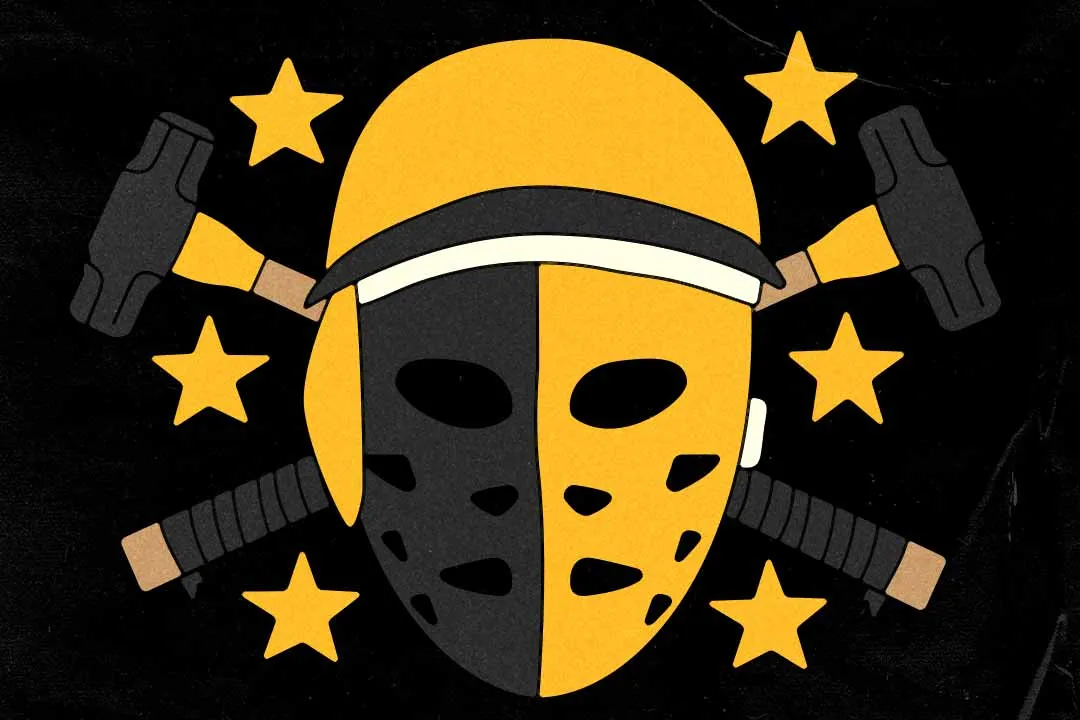
In ’78, you win the MVP award, and you fractured your cheekbone that year in a home plate collision with John Stearns of the Mets, and at first they put you in a hockey mask when you were coming back to play after that. You look like the bad guy in a scary movie out there with that hockey mask. What was it like — because I know that you abandoned that after a game or two — but what was it like trying to go up and bat with a hockey mask on? That seems like that would be almost impossible.
Well, it didn’t distort my vision, so I could hit, because at batting practice, I had a good round. I was hitting balls in the second tier and just putting on a show that day. And I was eligible to play, but Chuck had me on the bench for pinch-hitting purposes. So the opportunity came about for me to go to the plate, and they walked me intentionally. So the mask didn’t have anything to do with the decision that I was managing.
The 1979 All-Star Game
You’re the only guy in history that ever got to intentionally walk while wearing a hockey mask. That’s a record you’re going to hold forever, I think. So I wanted to ask you about the ’79 All-Star Game, because I think for a lot of us, even though it was an exhibition game, if I had to pick one game from Dave Parker’s career that’s gonna be the first one that springs to my mind, it’s probably that ’79 All-Star Game when you won MVP and nailed Rice at third and then threw out Brian Downing at the plate. What did the All-Star Game mean to you guys back in that era, when we didn’t have every game on television, and it really was a showcase for the players to be on national TV in primetime, with millions of people watching? Was that something that you really geared yourself up for, going out there and playing in the All-Star Game?
Yeah, I was super excited. There’s an opportunity for you to be against the very best in baseball, and display your talents to people that don’t get to see it on a day-in and day-out basis. So the All-Star Game meant a lot to me. It was about putting my ability against the other guys’ ability, and I refused to lose.
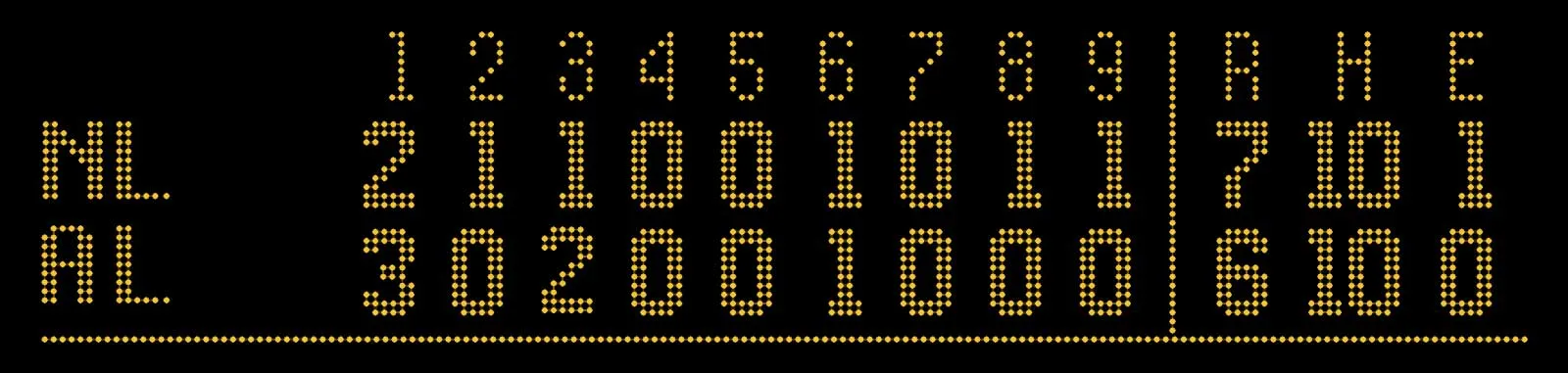
Replayed over and over again — but that beautiful throw that you made to nail Brian Downing at the plate. Was that a situation where the American League guys hadn’t really seen you enough to know better than to go? Because Brian Downing wasn’t necessarily the fastest guy in the world to begin with — he probably shouldn’t have tried you.
Well, you know, the game was on the line as well. I had to make a good throw. And Gary Carter made a heck of a play — he kind of went up a little bit to get the ball and came back and blocked the play. So that play was something that I shared with Gary Carter, to be one of the best throws in All-Star history.
Was it more fun for you to hit a home run — because obviously 339 career home runs, you hit your fair share of long balls — was that more fun for you, or was it more fun to gun a guy down on the bases?
It was a lot of fun just to display my talent, because I had above-average speed for a big guy, with outstanding base running — you know, could hit for average and hit for power. So just displaying my talents was a lot of fun for me.
Stargell and the ’79 Pirates
So ’79, obviously, was also a big year because you guys went to the World Series, came back from three games to one down against Baltimore and won the series. What are your memories of playing in that World Series? Because you got back and won another one ten years later with Oakland, but as anybody knows, it’s hard to get to a World Series. The National League East in that era was full of so many good teams, it was tough enough just to win your own division. But to get there and go to a Game Seven and win it all — what does that mean to you, looking back on it all these years later?
It means a lot, and it was something you could enjoy collectively as a team, and those kind of awards and achievements mean a lot to me, because it was something we all participated in and enjoyed as a team. So, you know, as a team was something that I always respected and enjoyed doing.
You were talking about how Willie Stargell was really a mentor to you. What did he mean to that team — not just on the field, because obviously he had a great year and was the co-MVP — but what did Willie mean to the guys in the clubhouse and off the field?
Willie was the foundation to the ball club. He was our silent leader. I was more or less the verbal leader.
What are your memories of that home run that he hit in 1978 at Olympic Stadium? I think he hit it off of Wayne Twitchell. People that talk about it, and there’s no video of it, so all we have to go on is the stories, but the people that were there talk about it almost like it was something out of the Bible — he hit it so far.
The ball was hit so far that they put a seat out there to mark where it landed, still going up. So I ain’t no telling how far it ever went. Willie hit the ball so hard that when I hit a single, I used to be afraid to be at first base because of the way he hit the ball. To really hit that ball off Twitchell had to be one of the furthest ones I’ve ever seen.
Cincinnati and the Oakland Dynasty
After the ’83 season, you signed with the Reds and go back to your hometown there. Was that an easy decision? Were there other teams that were in the mix there before you decided on Cincinnati?
Well, my agent, Tom Reich, had some discussions with Steinbrenner and the Yankees, and they couldn’t finalize that, but it was supposed to be a deal — a possible deal with me going to the Yankees. But, you know, Cincinnati was in the hunt, and it was my hometown, and I was at the 10-year mark in my career, so that kind of made it easy for me to choose Cincinnati, and going home and playing at home with my mother and father, living there. It ended up being a no-brainer.
You had a number of successful years in Cincinnati. You were runner-up in the MVP voting in ’85 and were fifth in the MVP voting in ’86. Ultimately, your next stop is Oakland, where you played in ’88 and ’89, went to the World Series both years, and got another ring in ’89. How do you compare that team to the ’79 Pirates? Because those are two great teams, and there were a lot of great players on both. What was it like with those A’s teams with Canseco and McGwire and Dave Stewart and all those guys?
Well, one — we had both teams, had great leadership on the team, and everybody kind of checked their egos in at the front door to work towards a common goal. And both teams had that. But as far as their talent, I think there’s no team I’ve ever played on that had the talent that Oakland A’s did. You had Rickey Henderson leading off, Carney Lansford hitting second, and Canseco hitting third, me hitting fourth, McGwire hitting fifth, Dave Henderson hitting sixth, Steinbach 7, Tony Phillips hitting 8, and Walt Weiss hitting 9. That was an all-star team. And there’s no team I’ve been on that had the individual talent that the A’s did.
What about that earthquake? Because that series — you know, those of us that are old enough to remember, but younger people might not remember — that series was interrupted for quite a while due to the earthquake. What were you thinking that night in the ballpark when that big earthquake hit?
We were kind of worried about our wives from there, because we had just crossed the big bridge 20 minutes before the earthquake took place. But all the attention diverted to our families, wives, and kids that was coming the same route that we had came. And everybody was on the edge until we heard that they were safely across.
The Sledgehammer
One thing I always loved about you is swinging the sledgehammer in the on-deck circle. Where did that come from?
Well, it was something me and Stargell just started. We got tired of putting three or four donuts on the bat, so we just went out and got a sledgehammer. Pick it up and it had the proper weight, sling it — so we chose, instead of using the donut, the weighted stuff, we just got a sledgehammer.
Facing Richard and Ryan
I’m telling you right now, I don’t think any starting pitcher was real excited on the days that they were facing you guys, because that Pittsburgh lineup — I mean, it was pretty tough in and of itself, especially having to go back-to-back with a couple of MVPs there. But I want to ask you about two pitchers, and one of them is J.R. Richard, who — because of his health situation that ended his career prematurely — maybe some people today don’t really realize just how good he was. I think maybe he was on his way to having a Hall of Fame kind of career, if not for that. What was it like facing JR when he was at his best?
Well, you had to get ready to swing the bat for sure, because he got it up there at about 102-103. And he was about 6'7". So it was like he could pull a fastball and reach out and slap you behind it, because he was so long right there. And they had a t-shirt — I’ll never forget the saying — said that first base looked far away when you’re facing JR. And that was true. So he had velocity and had good location with it.
What about facing Nolan Ryan, because both those guys similar in some ways just because of the velocity that they had — but what was the challenge like on the days that you were going out there and Ryan was on the mound?
Well, I mean, if Nolan had his curveball working, he had an easy 0-4 that day. And if he wasn’t getting his curveball over the plate, he was relatively — it’s a pretty normal pitcher, you know, that all you had to look for was his fastball. But if he had that fastball working, forget it, you know, shut the door. Because he had one of the best hooks in baseball, and when he combined that hook with the fastball, he was unhittable.
The Hall of Fame Wait
Thousands of baseball fans, not just myself — believe in their heart that you should be in the Hall of Fame. I think I’m talking to a Hall of Famer right now, regardless of what the voters may have said. How much thought do you give to the Hall of Fame and the possibility that at some point down the road that you’ll be selected by the Veterans Committee?
Well, I got a good shot for the upcoming voting, and I should know something soon. You know, my peers know that I should be a Hall of Famer. My numbers are good or better than a lot of the guys in the Hall of Fame. So I got people working on it that volunteered, called me up, and wanted to know if it was okay they made a campaign of trying to get me in the Hall of Fame. So I’m honored to have somebody that thinks that much of me. They put together an organization to try to get me in, and that means a lot.
Dave, I can tell you for a fact, that you’ve got as many fans out there who love you and appreciate the kind of player you were as any player that played baseball during the 1970s or the 1980s. It’s been an honor and I wish you all the best, and I hope that in the future we’re going to see you in Cooperstown.
Thanks, and I appreciate you saying that.
Editor’s note: This interview was originally conducted in October 2017. Parker got his wish: the Classic Baseball Era Committee elected him to the Hall of Fame on December 8, 2024, alongside Dick Allen. Parker died on June 28, 2025, at age 74, after a long battle with Parkinson’s disease, and was inducted posthumously that July.