
Joe Theismann: One-Bar Legend
The Super Bowl XVII-winning quarterback and 1983 NFL MVP talks Notre Dame, the Canadian Football League, John Riggins, the injury that ended his career, and the state of officiating in the NFL.
Theez-mann or Thize-mann?
You had such a successful career at Notre Dame. Your senior year, you guys won the Cotton Bowl, you were second in Heisman Trophy voting. One of the really interesting stories to me is the fact that your last name got a new pronunciation that year. Can you take me back and tell me how that transpired?
It was the beginning of my senior year. We had a really good junior year, and at the beginning of my senior year Roger Valdiserri, our sports information director, called me into his office and said, "Joe, how do you pronounce your last name?" I said, "It's Theez-mann." I had no idea where he was going with this. He said, "No, no, no, it's Thize-mann." I said, "No, it's not. It's Theez-mann." He said, "No, it's Thize-mann. Just give me the phone."
So I picked up the phone and called my dad back home in New Jersey. I get my dad on the phone and said, "Hey Pop, I got a question for you." He said, "Fire away, Joey." I said, "Dad, tell me, how do you pronounce our last name?" There was this pause on the phone. Then my dad came on and said, "Son, are you okay? You're a senior in college, and you don't know how to pronounce your last name?" I said, "I'm fine, I'll explain it later. Just tell me, how do you pronounce our last name?" He said it was Theez-man. So I turned to Roger and said, "My last name is Theez-mann. I just got off the phone with my dad."
He said, "Joe, I want to explain something to you. There's a trophy out there called the Heisman (Hize-man) Trophy — it's the best college football player in the country. We think you have a chance to win that trophy, but we're not just going to count on Notre Dame or your athletic ability. We think just by changing the pronunciation of your last name, from Theez-man to Thize-man to rhyme with Heisman, we can get you that trophy." And then I became Joe Thize-man.
The footnote to that is my grandmother, who was the matriarch of our family, who'd come over from Germany. At that time Granny was in her middle-70s or so, or early 80s. I said, "Gram, they're thinking about changing the pronunciation of our last name from Theez-mann to Thize-mann." She said, "Let me tell you something — actually, the correct pronunciation is Tice-mann, and Thize-man is closer than what we have now." So I got the blessing from my grandmother.
CFL or NFL?
A lot of people may not realize that you cut your teeth professionally in the Canadian Football League. You had a successful career at Notre Dame and you're drafted in the fourth round by the Miami Dolphins. What led to you ultimately going north to play for the Toronto Argonauts?
It was a mistake on my part, I would say. I've come to learn that professional representation is very important when it comes to any kind of negotiation, because in negotiations once your emotions get involved, it skews the entire picture for you.
I was drafted by the Toronto Argonauts and I was drafted by the Miami Dolphins. I flew down to Miami. At that time, Joe Thomas, who was the general manager, was actually having heart surgery, so I met with Mr. Joe Robbie, the owner of the Dolphins. I walked into his office and sat down, I was disheartened being drafted in the fourth round, because everybody kept telling me I'd go higher. But I was drafted and that's what was important. So I walk into his office and we have the cordial hellos, how are you, and then he said to me, "Well, what do you want?" That was my first mistake — you never tell somebody what you want, you wait and see what they offer and then you understand what you’re going on from there.
So I said I want $35,000, $45,000, and $55,000, and a $35,000 signing bonus. Which the numbers today, these guys spill more than that. He says, “Well, you know, that’s not what we pay fourth-round picks, but in your case, okay, good.” So I thought we had a deal. When I got the paperwork, I broke the bonus down to three separate payments over three years — $12,000, $12,000, and $11,000, for tax purposes — with a clause that had me paying the money back if I didn't show up.
Now remember, back in ’71, we just had — ’66, ’67, ’68 — the Vietnam War. I didn't know whether I would wind up being called into service, out of college now. I didn’t know what was going to happen, so I stayed in contact with Leo Cahill, the coach of the Argonauts. I flew to Toronto. I met with them and they said, “Look, you either sign this contract — $50,000, $50,000, $50,000, $50,000 across the board, U.S. funds — or else it's off the table.” I signed it. And I asked John Bassett, who owned the Argonauts, “Please, let me call Coach Shula and tell him what I'd done.”
Well, I arrived back in South Bend and I get a phone call at 6 a.m. from Ara Parseghian, my coach, who was my consultant — whom I never consulted. He said, "What in heaven's name have you done?" I said I’d signed with the Argonauts. He said, "I know. I just got off the phone with Coach Shula. He's on his way to South Bend now." That was not a very pleasant conversation, and I think Don hated me for a number of years. Then in 1982 we beat the Miami Dolphins and Don Shula in the Super Bowl, so I guaranteed another ten years of him not liking me.
We have since… I send my best along to him all the time. I don't have very many regrets about life. I never look in the rearview mirror, because I can't change that — I can only change what's out in front of me. But I think playing for Coach Shula would have been an incredible experience.
Returning Punts as a Rookie
In ’74 the Redskins acquire your rights from the Dolphins for a first-round pick. You come down to the NFL from Canada and your first couple of years you really didn't see much action, but you were a punt returner in ’74. How did you land in that role?
Interestingly enough, my sophomore year at the University of Notre Dame, back when I was in college, freshmen weren't eligible, I returned punts with a guy named Bob Gladieux for the first seven games of my sophomore year. Then Terry Hanratty got hurt in practice on a Friday, and Ara had Coley O'Brien — who had quarterbacked the Notre Dame football team in the National Championship game in 1966. And he had another guy by the name of Bob Belden — both seniors and Terry Hanratty. So there were three seniors and me as a sophomore. And so Ara turned to me and put me in.
And so becoming the starting quarterback, I retired as a punt returner. But then I went to the Canadian Football League, and I used to catch punts up there. If you kick the ball into the end zone with a punt and it’s not returned out, it's a single point for the team that kicked it in. So at the end of a half or the end of a game, to protect one point, I used to catch the ball and kick it back out. Now, in the Canadian League there was no downfield blocking, but they gave you what’s called the five-yard halo rule, where the players couldn't come inside the five yard area, so I'd have to catch it and punt it back quickly.
And then when I got to the Redskins, it was just sort of a continuation. I caught punts for a long time. When my dad and I used to play catch — he'd throw balls up in the air and I'd learn to catch fly balls. So in ’74 and ’75 I returned punts, in ’76 and ’77 I sat and watched, and in ’78, Jack Pardee took over as coach and gave me a chance to play.
In 1970 you were second place in the Heisman voting, but it’s not until 1978 that you take over the full-time role of getting the reins of an NFL team — three years in Canada, basically a four-year apprenticeship with the Redskins. When did you find out that the job was yours, and what did that mean to you going into the season knowing that it was your team?
It was frustrating. Billy Kilmer and Sonny Jurgensen were the quarterbacks here, and in hindsight I learned an awful lot from those guys, not even realizing I was learning something from them at the time, as I look back. At that time, all I wanted to do was play, and all they wanted to do was play, so there wasn't a very good relationship with Sonny and Billy. I only played one year with Sonny, and then Billy and I really didn't care for one another, to be honest. He had what I wanted, and he wanted to keep what I wanted. It was not a good situation.
Plus, the Redskins were also the most senior team in football. In 1974, when I joined the Redskins, there was a strike, and I crossed the line — so that didn't endear me to anybody. And as long as George Allen was going to be the coach, the chance of me playing was probably very slim, because George believed in veterans, and not making mistakes. He believed in defense, running the football, and not making mistakes. That was his philosophy.
And then when Jack took over, Joe Walton became the offensive coordinator. Joe really is the man that shaped my game — I owe so much to Coach Walton, for what he did for me. And Coach Teddy Marchibroda, who was my first coach. It was frustrating, and so that’s why I returned punts in the early years because I wanted to do something. Heck, I ran wide receiver on the scout team, I was on the punt return team, I would try and block gunners when Larry Jones took over to return the punts the second year.
Then in ’78, when Jack took over, he gave me the chance to be the quarterback. I'll never forget — we were 6-2 in 1978, and I was on the cover of Sporting Magazine and whatever, the new kid in town. Then we went 2-6 and then I wasn’t on the back page of anything so it's funny how quickly things flip around in a heartbeat in our business.
It was frustrating but then I got my chance to play. I was just a skinny kid. I never played heavier than 185 pounds for 15 years of professional football. I wouldn't even be an afterthought today. I would never get invited to a combine. People would never look at you. That's why I'm so thankful I played when I did, because you were judged at a different way at that time. For me, it was just a dream come true to be able to be a quarterback in the National Football League. I'd chosen football over baseball — I'd been drafted by the Minnesota Twins to play as well.
The One-Bar Helmet
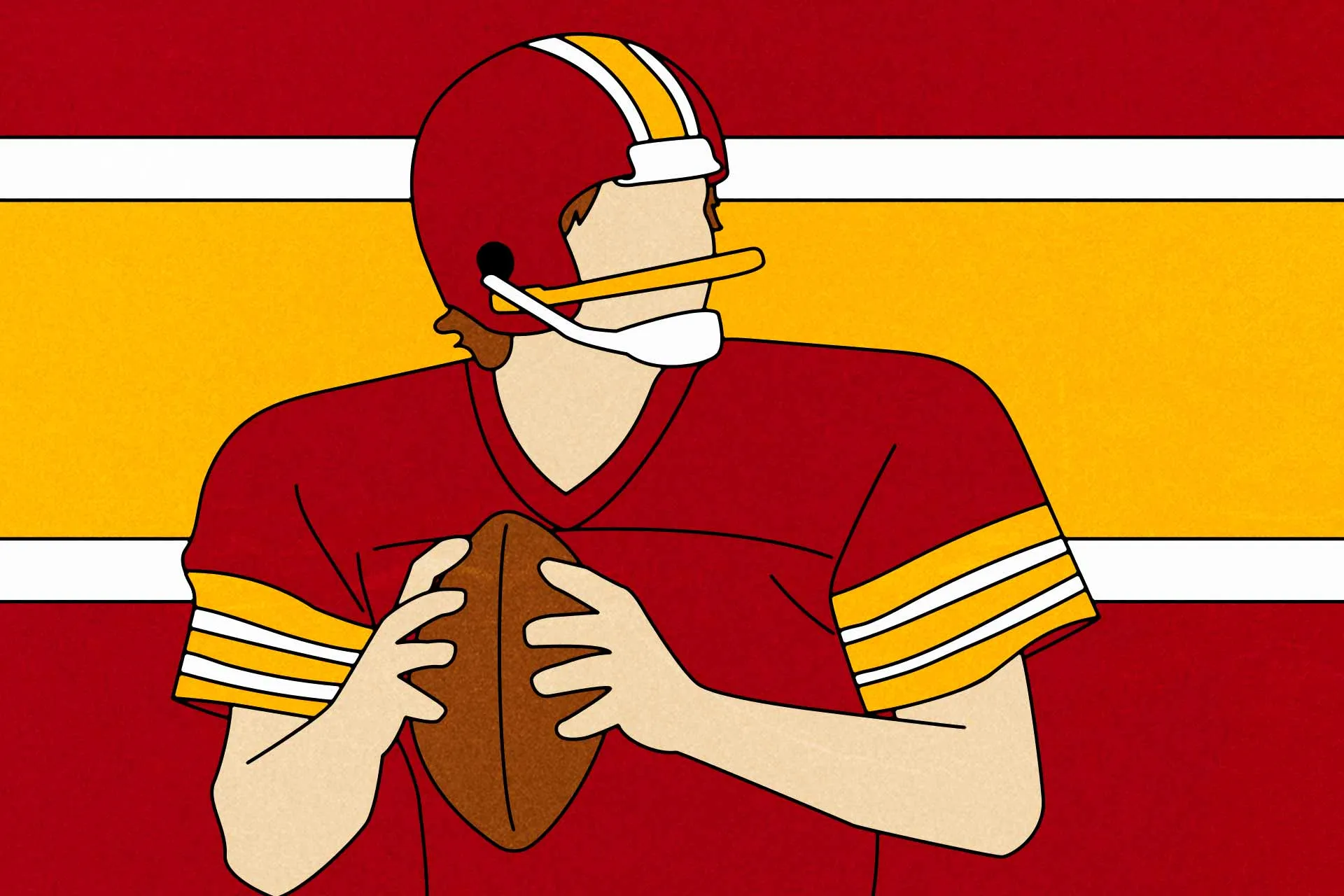
You're the last quarterback that I remember wearing a one-bar face mask. How did the one bar become your preference?
I actually wore it in Canada, my latter years up there. There’s actually two reasons. One was simply because when I looked down to hand off — it wasn’t throwing the ball because you always looked over the bars — but to hand off the other bar bothered me, it was a nuisance. But then the second reason was that both Billy Kilmer and Sonny Jurgensen wore single bars, and I figured, what would I look like having a double bar with these two guys, who were icons in the city of Washington, wearing single bars? So a little bit of it was ego and pride, the other was basically just trying to do my job and be efficient at it.
Playing Through Pain
Take me through what a typical week would be like for you in terms of recovery after a game.
I was a different animal. It's funny — guys get massages today, and these kids don't practice today. They're off January, February, March, and April. They can't even go to the facilities to work with their coaches. That’s how absurd this collective bargaining agreement is that these guys work under now. I think the game is hurt by the fact that the athlete can't spend time with the coach at their profession four months of the year. It's crazy.
For me, I'd play a game on Sunday, and Monday I'd be out at the facility, running around, throwing the ball around, lifting weights, having a good time. I loved it. The recovery period for me was go to bed Sunday night after you're all beat up, because the first day I went to training camp was the last day I knew I was going to feel good. I was always going to have something that hurt me. It didn't matter whether it was arm, leg, ribs.
I've had seven broken noses. My teeth have been knocked out. Multiple concussions. Two broken right hands. A dislocated elbow. Broken collarbones. Broken ribs. Broken leg, twice. Torn-up knees. Hip pointers, which really is just the muscle being torn away from the hip. I've had all these different things.
I prided myself on being able to play the game — I played 163 consecutive football games. The day they carried me off the field was the last game I played in. At the beginning of the ’85 season, that was the year I got hurt, a reporter asked me in training camp how long I planned to keep playing, because I was 35. I said, "Shoot, I'll play until they carry me off the field." Well, I learned a great lesson then — never say something and bring it into this universe, because it could possibly happen. Be careful what you wish for.
The Injury
What was worse, the injury itself or being asked to give your reflections on it for 30-plus years since then?
To be honest with you, it wasn't a tragedy — it was a blessing. I had enjoyed such tremendous success in professional football, being an MVP of the league and a Super Bowl champion. I really thought the world revolved around me. I had become very self-centered and very egotistical. I felt like I was better than other people.
I believe God intervenes in our lives in different ways, and for me, it was divine intervention. I had reached a point in my career where I was extremely successful as a football player, but I continued to deteriorate as a person. I think the good Lord decided that I had served my time, and I had served my purpose as an athlete, and now it was time to reevaluate my life — to try and help people understand what they can do to achieve the things that they want in their life, and do it in the right kind of way.
The gift was the opportunity to play with some great players and great coaches and receive some awards. But the greater gift is what I'm trying to give back now, in the motivational speeches that I do. It's not all about you. It's not all about who you are. It's about what you can do for people — instead of walking around with your hand out, walk around reaching out to bring people into your world.
That particular night really was the changing point in my life. It took me a while to realize it. It didn't happen, like, the next day… It's a hard thing to deal with: the thing that you love, the thing you do so well, you thought you did it well, you've committed your life to it — all of a sudden it's gone. I tell people all the time, snap your fingers — that's how quickly your life can change. Now, how do you deal with the change that’s occurring in your life? That's really what I talk about when it comes to the presentations, is dealing with change. Mine was instantaneous, and it took a while to really learn about who I was and what my purpose was going to be going forward in life.
How long did it take before you realized this was a career-ending injury?
I had broken my leg in Canada in ’72 — but only broke one bone. This one was quite more severe because it was an open compound fracture. They never rodded it. That's the other thing — I don't have a rod in my leg, which now today is almost standard procedure.
I tried to come back. I worked out in April of ’86. I was scheduled for an hour workout, because I had insurance. I'd insured myself. So I worked out for the insurance company and our team. It was supposedly an hour workout and fifteen minutes into it, everybody walked off the field. I walked into the locker room and I said, "I'm not done." And Bubba Tyer, our trainer, he looked at me and he said, "Oh, yes, you are."
The Strike Season
In ’81 Joe Gibbs takes over as the head coach of the Redskins and in ’82 you play two weeks then you’ve got a strike that knocks out eight weeks of the season. What was it like coming back on November 21? What was the football team's mentality coming back from that layoff?
I don't know what other people did, but what I tried to do was I kept our last game plan. I believe we were off six weeks. For the first four weeks, I'd set up practices at soml high school, and we probably had 35 guys attend the first three weeks. It was down to about 25 the fourth week, and then it petered out a little bit as time went on. But we stayed together — we practiced, and we built camaraderie during that period of time. You get 35 guys out for a voluntary practice, three days a week, that’s monumental. I think that probably built the foundation of what we became as a football team.
As the quarterback, like it or not, you're a leader. What does that aspect of the job mean to you?
They're always looking toward that position. If you're going to play quarterback with any degree of success, leadership has to be part of it, because there are different points in your career, in different games, where they're looking for you to make the play. You are in the position to have the responsibility to be able to deliver in the moments where they’re important.
Anybody can lead a ship that's doing well. It's when things get tough — can people look to you and say, okay, take us some place, get us out of this mess? And you can't do it by words… Words are very shallow. It's your actions that speak volumes when it comes to being able to judge whether someone has the ability to lead or not.
I'll give you two very contrasting types of people we’re looking at. Brett Favre is a great leader on the football field — jumping around, playing like a 12-year-old kid. Joe Montana, another great four-time Super Bowl champion, was very quiet, almost steel-like, with ice water running through his veins… Two very different types of individuals that approached the game, but the same types of leadership skills — when it came time for them to make a play, they did. That's what people look at and that’s what people care about, because you're really only one forty-sixth of a football team. You can't win without a quarterback, and yet the quarterback is the single most dependent guy on the field, when you stop and think about it.
Super Bowl XVII and the 1983 MVP Season
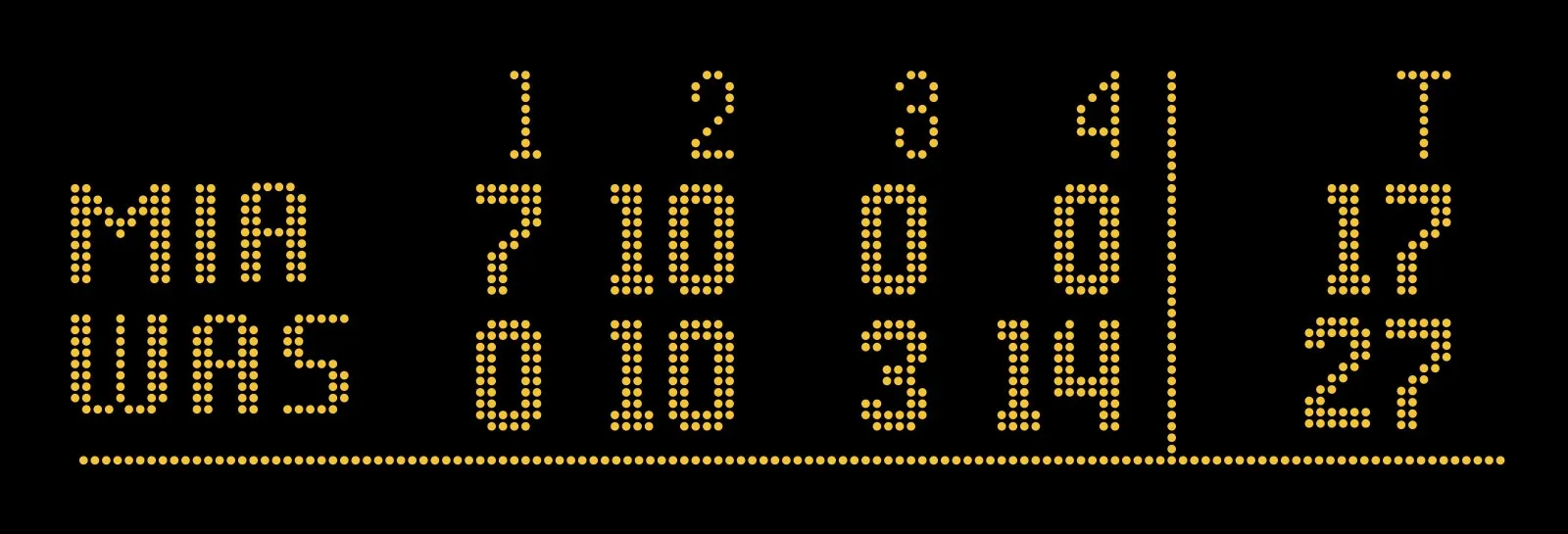
Take me back to Super Bowl XVII — you guys enter the fourth quarter trailing Miami 17-13. What's it like being on the largest stage in sports, close game, trailing, everything’s on the line?
Joe Gibbs had told us in the meeting the night before that if we could get into the fourth quarter within a touchdown — up one or down one — we could control the game, because we were bigger than they were. We never really changed our approach. We never really got away from running the football, and we basically wore them down. The ability to be able to do some of the things we did in the passing game helped us tremendously.
It’s what every athlete lives for — the opportunity to deliver under pressure. I think that's what separates people is how well do you handle pressure? Is the stage too big for you? Do you wilt when the lights get really bright? I used to love those moments. I felt much more relaxed in that kind of a moment than I did if we would play the 0-12 Tampa Bay Buccaneers. I’d be nervous as heck.
Let me play the Dallas Cowboys every Sunday. But when you play a team that’s not a good team because they’re so undisciplined to a degree. When you play a great football team, you know what you're going to get. They got there in a particular way, and they're not going to change a lot of what they do. If you’re doing something well, you’re going to keep on doing it. When it comes to teams that aren’t successful, you’re never quite sure what you’re going to get. You get these crazy looks, these crazy moments, and you say, “That doesn’t make sense.”
I always measured myself against other people — I call it validation. When I was in high school our validation came on Thanksgiving Day when we played New Brunswick High School in New Brunswick, New Jersey, a great rival of ours. And then when I went to the University of Notre Dame the validation came if I could play well against the University of Southern California because they put so many guys into professional football. Then I belonged being a college quarterback. And then the validation came in professional football when we played the Dallas Cowboys because they were perennially great. And if I could play well against them then I deserved to be a professional quarterback.
You win the Super Bowl in the ’82 season, come back in ’83, go 14-2, you're the league MVP, but you ultimately lose the Super Bowl that year. Winning the MVP and Super Bowl in successive years, you had to be on top of the world at that point.
Yeah, I was. We enjoyed tremendous success. In ’84 we went back to the playoffs, won the division, and played the Bears — that was the beginning of the Bear dominance, ’84/’85, when they became something special defensively.
That's where I started to think that I was pretty darn good, because I achieved that much success. I had an opportunity to quarterback a football team that would have won back-to-back Super Bowls — there had only been two prior to do that. That moment was special, but I just didn't capitalize on it. I didn't deliver when I had the opportunity to. I didn't prepare properly. I think about that game quite frequently and I think about the preparation that I went through to get ready for it.
I'd already been a champion, and I tell people all the time: don't live on yesterday's performances. Every day you got to prove yourself — whether it's your job, whether it's as a parent, a partner, a friend. Every day you have an opportunity to prove yourself. Don’t think because you did it yesterday it's automatically going to be the same thing today.
Did the losses hurt more than the wins felt good?
Oh yeah. The losses are deep. It's an interesting question because I remember after we won the World Championship in ’82, we were in Hawaii at the Pro Bowl, and I was sitting under a palm tree Thursday afternoon with Bob Baumhower, who was a nose tackle for the Miami Dolphins. I said, "Bob, I apologize, but I just have to ask this question: what's it like to lose the Super Bowl?" He said, "Joe, it's the worst feeling in the world. You wish to God you'd never gotten there. It’s just so devastating." And I said to him, “Jeez, I hope I never have that feeling.” Wouldn't you know it — a year later he was absolutely right.
It's so hard to describe the euphoria that you feel when you win one, and you work so hard to get there. You're one of two teams that have an opportunity right in front of you to become part of the history of the NFL — and it's gone. Think of guys like Danny Marino, for example, who went to one and lost it, and then Jim Kelly, who went to four and lost them.
John Riggins and Cannonball Run II
Is John Riggins really as crazy as he seems?
John is not crazy. John is an interesting personality. John just loved life, and he had his own way of doing things — obviously, with all the different hairdos he had with the Jets and with us. But there wasn't a harder worker. John used to just stay after practice and work his rear end off. He used to meet with the offensive line — he never was in our passing meetings, John never sat in our installation meetings for the pass game. He always sat with the offensive line and the running game, with Joe Bugel and the guys, the Hogs.
Johnny was just fun to be around. When I played for the Redskins at that period of time in the ’80s, I felt more like the ringmaster of a circus than I did the quarterback of a football team. We had the Smurfs, our wide receivers. We had the Hogs. We had John. Our defensive backs had a moniker. It was just a really fun group of guys.
What are your memories of being in Cannonball Run II?
I had the chance to work with Susan Anton and Catherine Bach — that was a very pleasant experience, let's put it that way. And Burt Reynolds has been a friend for many years, ever since I first met him at an awards ceremony in Las Vegas and asked me to be in Cannonball.
It was an ensemble of people — Academy Award winners that you won’t see a collection like that anywhere. I mean, Sammy Davis Jr., Dean Martin, Charles Nelson Reilly, Frank Sinatra, Burt Reynolds, Dom DeLuise, Jackie Chan, the orangutan from various movies, Tony Danza, Shirley MacLaine, Marilu Henner, Catherine, Susan. It was just fun.
I remember sitting around one day while we were filming in Tucson, and Sammy had brought out these six-shooters, and he was twirling them like a gunfighter.