
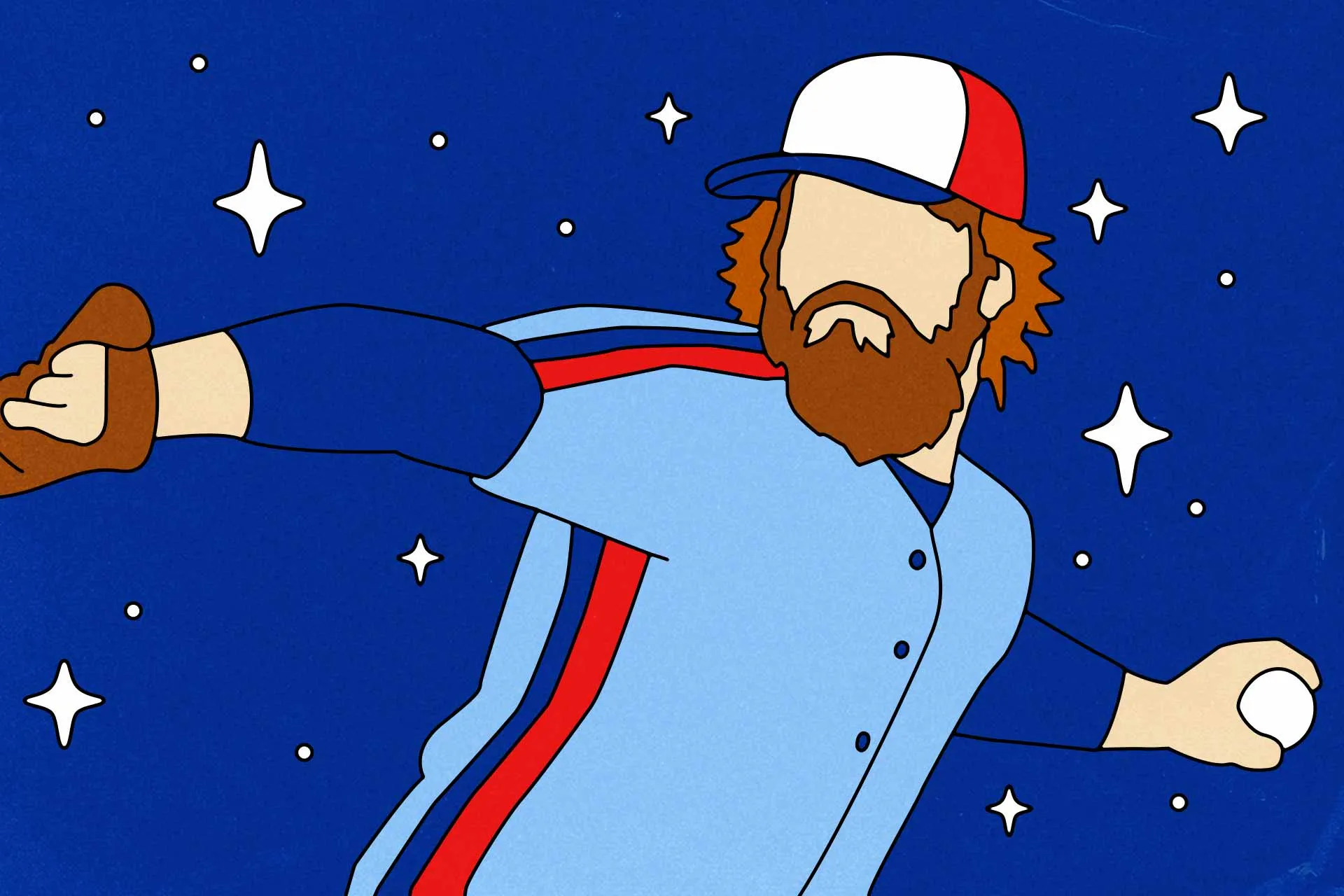
Bill "Spaceman" Lee: The Last Honest Man in Baseball
The former Red Sox and Expos left-hander talks the 1975 World Series, the designated hitter, Steinbrenner, Zimmer, and why he's still trying to bring baseball back to Montreal.
A Change of Time
Unlike a lot of guys in baseball at the time, you were a college man, winning a championship at USC. Coming into the major leagues in 1969, being a college man and an opinionated man — what was that experience like with everything going on in the world at that time?
That is a great question. Why did Ken Burns use me at the end of inning eight and the beginning of inning nine, bringing me in with "Truckin'" by the Grateful Dead? It's because it was a change of time.
’69 was a pivotal year in our nation's history, and I kind of came in with it. Things didn't appear to be what they exactly were. I was exactly like Buffalo Springfield: "There's something happening here, and it ain't exactly clear. There's a man with a gun over there telling me I got to beware. You got to stop, children, what's that sound."
It's unbelievable that Ken Burns saw it. I saw it, and the people in power did not. That's why we lost the Vietnam War, and that's why we went into Iraq.
People don't realize that baseball is the conscience of America. There's a French philosopher — I forget who — who said if you want to understand America, you'd better understand baseball. I think that's why they use me, and why you're talking to me right now.
Society was changing and baseball was beginning to change in many ways as well. By the early 1970s, there was long hair and mustaches and people starting to speak more freely about what was going on in baseball and the world itself. What was that transition to professional athletics like for you? What were your first impressions of the Red Sox organization when you got into pro ball?
I came in wearing a three-piece suit. I'm Irish Catholic, I drink a lot, and all I had to do was keep my mouth shut. Three out of four ain't bad.
Charlie Finley used that long hair and characterizations for his championship teams of ’72, ’73, and ’74. The thing about baseball is honesty. You're out there by yourself, sixty feet six inches from your opponent, and you are telling all. You’re winding up and if you telegraph your changeup and hang it, they hit it. If you throw it good and deceive them, you get them out.
It is the most honest game there is because there's no clock involved, and everybody watches because at the end you can say, "I've never seen that before." That's why we continue to be amazed by baseball. But it's also why we're overspecializing, tampering with a game that is true honesty, and now it’s becoming more of a corporate-type thing.
The players get too much money, the advertisers and everything, and the games go on too long. They're draining the temperament of the fan by doing all this extra stuff. It's the game that's important, stupid.
Learning to Pitch
When you came up they put you in the bullpen primarily. As a pitcher, what is the difference mentality-wise between working out of the bullpen and knowing that you're going to get the ball every fourth or fifth day?
It's tough being in the bullpen. You're a young prospect out there with a bunch of suspects who are drinking and smoking, guys who are in the bullpen because they can't get anybody out. You pick up bad habits.
I was dubbed as a pitcher, not a thrower. I didn't throw hard, and I didn’t impress radar guns. Coming out of Little League, I was a four-pitch pitcher.
The other day I did a clinic for the Yard Goats down in Hartford, the Colorado Rockies' AA team. I had a room full of kids, young and old, and fathers too, and I asked them, "How many of you were told not to throw a curveball because it'll hurt your arm?" Most of them raised their hands.
I told them: today we're going to learn how to throw the curveball. The curveball doesn't hurt your arm — trying to make a fastball break does. If you can get the curveball grip and the right aptitude of going over the barrel of pulling down the window shade, you won't hurt your arm. I never hurt my arm on a curveball.
The complete game is truly an endangered species now, and yet the disabled list is littered with arm injuries, elbow injuries, Tommy John surgery. Is the way teams are approaching this kind of broken?
Yes, it is. They approach it from throwing, not pitching — from academics and statistics instead of being a complete pitcher and ballplayer. The main problem with pitching is they do not decelerate properly. They've taught them to pick up the back foot, come down the hill hard, throw hard and worry about deceleration later.
In the old days, Tom Seaver never hurt his arm. Seaver, Nolan Ryan — we were all drop-and-drive pitchers. The only guys who hurt their arms were more like Koufax, who extended and his elbow was gone. He used a tube of capsicum every day. Back in the old days, we used counter-irritants, like Parke-Davis Capsicum on our arms. We made our arms hurt so we wouldn't feel the pain inside. Now they've got it all back-asswards.
That's what's wrong with baseball: overspecialization, academics, advertising, and Halliburtons. Ballplayers hurt their arms because they're carrying around way too much cash in their pitching arm.
The Breakout Season and the DH
Let’s go back to ’73 when you moved into the rotation and announced your arrival as one of the finest pitchers in baseball. You go 17-11, 2.75 ERA, you make the All-Star team. What was that experience like?
I went to that game and had to ride in a cab with Reggie Jackson, which probably ruined my career — having to listen to him talk about himself all the way out there. Then in the meeting, Dick Williams asked if any pitcher on the staff wasn't a hundred percent positive he could get the National League hitters out.
I looked around, and nobody had their arm up except me. He said, "Bill, why's your arm up?" I said, "Because my father told me only fools are positive." I didn't get in the game, and I never made the All-Star game again.
What was it like walking in there and being surrounded by all those guys that were the cream of the crop?
I belonged. I was that good. If I don't get my arm broken by Nettles in ’76 — dumped on my shoulder — I win seventeen games and for the rest of my life, and I'm sitting next to Warren Spahn in the Hall of Fame.
1973 was also the introduction of the designated hitter in the American League — taking the bat out of your hands right at the point when you were going to get the opportunity to bat three or four times.
Oh my god, it killed me. Broke my heart.
The road to hell is paved with good intentions. The designated hitter was created by Charlie Finley, and it had nothing to do with increasing offense. What it had to do with was limiting the number of substitute players — relief pitchers — so teams could lower the roster from twenty-five to twenty-three so they would have less salaries, less pensions, and that profit margin would get right into the owners' pockets. That’s all that it was about.
The designated hitter overspecializes, it forces you to take the game out of the manager's hands. You don't get bunting, you don't get substitution, you don't get the double switch, you don't get any thinking.
That's what's wrong with baseball — overspecialization breeds extinction. It's the first chapter of Buckminster Fuller's Operating Manual for Spaceship Earth, written in 1969. Look it up.
The 1975 World Series
The ’75 World Series is considered by many to be the greatest of all time. You started Game 2. You started Game 7. Fred Lynn told me he felt that if Jim Rice had played in that World Series, you guys would have won it in six games.
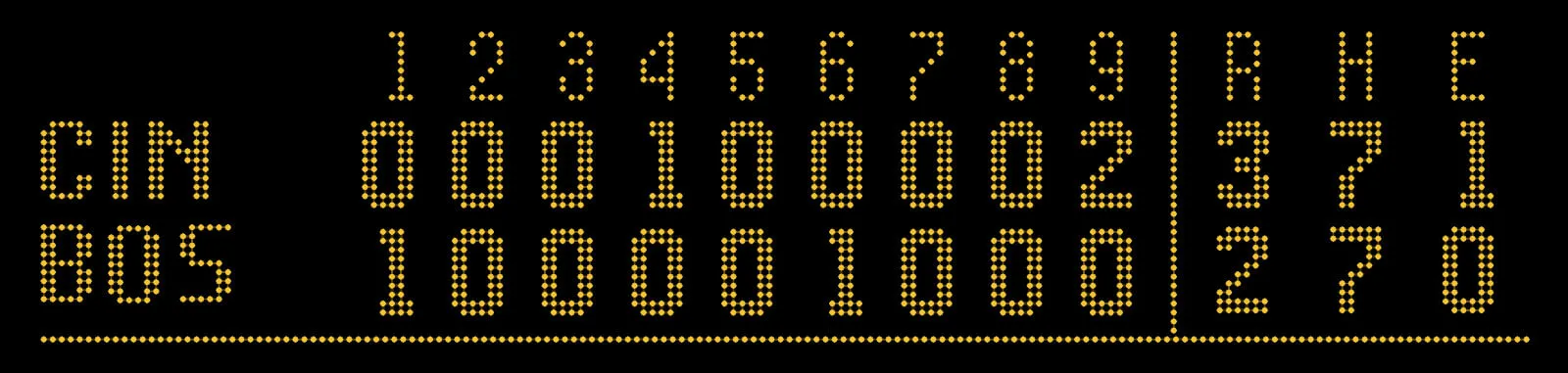
Easily. He's exactly right. And we should never have played Game 7 — I should have won Game 2. They should have taken me out in the eighth or ninth inning after the rain delay and brought in Roger Moret, who was fresh and threw hard and threw strikes. I'm very sure we would have won Game 2 two to one. And then when Fisk hit the home run, that would have been the World Championship home run — and it would still have been just as good of a World Series.
In 1962, the Dodgers had to play the Giants in a playoff game. Harvey Kuenn came up to pinch-hit. Leo Durocher moved the rookie second baseman away from second base and Kuenn hit a double play ball. They don’t turn the double play and McCovey hit the three-run homer and the Giants win.
In the 1975 World Series, Don Zimmer did the same thing to Denny Doyle — moved him away from second base. We do not turn the double play, I throw the two-run homer to Perez, and we lose the ball game.
I had a 3-2 lead when I came out. But all of that is academic if Rice is healthy — we don't play Game 7.
Take me back to Game 3, 10th inning — the Ed Armbrister/Carlton Fisk no-interference call by Larry Barnett. How did that change the trajectory of the series?
Oh, for sure, it affected the series. Everything was stacked against us. Armbrister interfered — he caught Fisk's elbow and put him in a position where he couldn't get his foot down. Fisk's throw sailed into center field, Rose goes to third, and it’s all over. We lose the ballgame.
We should have won Game 2. We should have been in a better position to win that ball game. And then we win it in five.
You lost the ’75 World Series but are more famous and celebrated than the vast majority of teams that actually won the World Series. It’s like that series transcended winning and losing. The Fisk home run is the iconic moment of that series — embodied by the team that did not win the series. Tell me your memories of the Fisk homer.
Unbelievable. There's so many things about that. Pat Darcy gave up the home run — George Kimball actually named his son Darcy after that game.
Fisk hit a low fastball that clanged off the left-field foul pole up high and it bounces back. Foster catches it behind his back with one hand, and twenty years later he paid off an income tax debt to the state of Connecticut with that very ball. Is that amazing?
You look at things like that, and when you dissect them, you realize you can't write this stuff. It’s amazing that the truth is so much better than fiction.
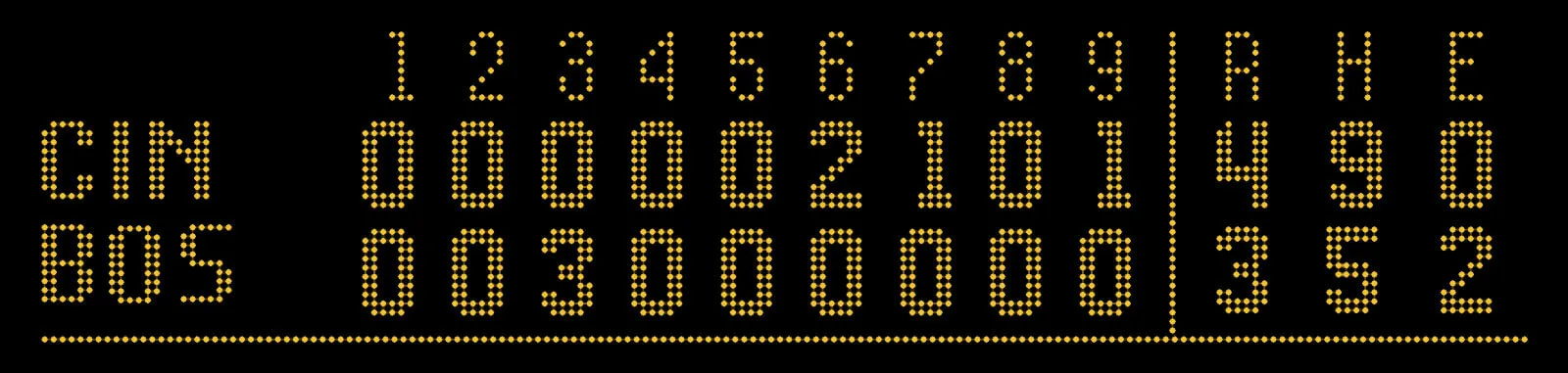
Game 7. You guys are up 3-0 in the sixth. You’ve got a man on with two outs and you throw the slow curve to Perez and he puts it over the Monster.
I should have not thrown that pitch because I didn’t have to throw that pitch if we'd turned the double play. The funny thing is when you're upset as a pitcher — I was upset we didn't turn the double play — you come out as a pitching coach and you settle me down before I make the mistake, not after.
A lot of people forget, though, you guys still had the lead after that home run.
Then I got a blister and bled on the ball. I walked someone and I remember I threw a 3-2. My thumb had blood on it and I just couldn't get the ball down. I should have come out before I walked that hitter.
Here's the amazing thing. In 1978, we lose on Bucky Dent's home run. I’m 10-10. I don't pitch again. I’m pitching in my second game in Montreal and I get the same blister and I start bleeding. I tell my trainer, Yvon Belanger, that I’ve got to come out of the game.
He goes, "No, no, Bill — watch this." He goes in and gets a silver iodine stick, dips it in water, rubs my thumb and cauterizes my thumb. All of a sudden now I have a better breaking ball. I throw the seventh, eighth, and ninth inning and I win the ball game. I win sixteen games for the Expos. If I'd had Yvon Belanger instead of Buddy LeRoux, I win that ballgame.
There are not a lot of people on this earth that know what it's like to start a Game 7 of a World Series. What's it like mentally as you are preparing to do your job on that stage when it’s an elimination game?
Not much. Don't think, Tiger, or you'll hurt the ball club. Or pry this ball out of my cold, dead hand.
Kill Bill
In 1973 there was a brawl on the field, and your quote was that the Yankees looked like a bunch of hookers swinging their purses.
Yeah, because Michaels — they were all scratching each other, it looked like a cat fight. That wasn't nearly like the one I got into in ’76, where I got my ass kicked twice. To this day, I carry Graig Nettles' baseball card in my wallet, against the right cheek of my ass, where the smell and the view do not improve for him.
Nettles allegedly remembered that comment — legend has it that may have been the reason he targeted you in ’76.
If you look at that video, it was assault. In fact, I know, because the month before, I got Billy Martin fired from the Texas Rangers. Then Martin went back after Virdon got fired and took over the job. And his job — he said it — was to kill Bill Lee. I heard about this from Johnny Pesky and they had a vendetta out on me for the rest of my career. I was a marked man.
Tell me about Martin getting fired in Texas and your role in that.
Fisk was catching. Hargrove, the Human Rain Delay, was hitting, and that's when they were going to instill the twenty-second clock in that series in Texas. So I watched the clock and counted it down, and when it hit twenty seconds, nothing happened. I slammed my bat on the front step of the visiting dugout and went, “Strike One!” The umpires stood up, Hargrove got out of the batter’s box, Fisk fidgeted around, and they did it all over again — I went, “Strike Two!”
Martin went nuts in the opposing dugout, and started hanging on the girders, swinging around and rubbing his arm like he was an orangutan. Corbett fired him the next day. You can look it up.
Let’s jump ahead to ’78. That was the year I fell in love with baseball. The first real pennant race that I remember is the Yankees making that comeback from 14 games behind you guys. Later you faced each other in the AL East Championship. What are your memories of the 1978 season, playing for Don Zimmer, and the season getting away from that ball club?
I was the last of the Buffalo Heads — Willoughby, Wise, Carbo, Jenkins, and me. I was the last one Zimmer got rid of. On December 7, 1978, Pearl Harbor Day, I was traded to Montreal.
I went to Al Jackson on that last day on the playoff game, and I said, “My arm is perfectly healthy. I've worked hard every day.” Gary Allenson, my catcher, backed that up. He said, “You threw every day and had pinpoint control. You could’ve won that ballgame, Bill.”
Al Jackson said, “You’ll never get in that ball game.”
I said, “Well, the wind is blowing in.” And I remember Jackson hit a ball to left field that would have been a homer off the wall that would have put them up, and the wind knocked it down and Yastrzemski caught it. I told Al Jackson, “In the fifth or sixth inning, it’s going to warm up, the wind’s going to change, and there's going to be an offshore breeze off the ocean and the ball’s going to carry to left field.” And that’s when Dent hit the home run. And I did not get in that ball game and we lost that ball game because I did not pitch in that ball game. And that’s the summation of the season.
I could write a whole book on that season — how they mistreated me, how Zimmer put me in his doghouse. How I was 10-6, lost four tough games, became 10-10, and was benched out in Seattle. I remember the day I’m sitting with Drago when he came to me and told me I wouldn't pitch again, and he was right.
I pitched in the Boston Massacre, I threw nine and two-thirds innings. I gave up one run, a homer to Piniella in relief. If you'd taken those nine and two-thirds innings and put them in one ball game, Bucky Dent never comes to the plate. You can look that up too.
The problem with me is I'm a steel trap — my memory is always right. Most people's memories are a little distorted, but mine's about ninety-nine percent right. That's why management hates me. Because I know where all the bodies are buried.
On the Bucky Dent home run, from your vantage point, did you think it was going to get out off the bat?
Yes. I was sitting out in the bullpen, and here's what happened. He was throwing pretty good, but I knew he was going to get tired because he threw nine innings about three or four days earlier. I knew Torrez was going to go out with all guts and glory, but I knew you had to get him out of there in the fifth or sixth inning.
I know biomechanics. I know the physiology of exercise. I can watch a pitcher and know when to get a guy out of a ball game. I knew Torrez had to come out of that ballgame.
If I had to come in, I’d throw three sinkers to Dent, he hits a weak ground ball to short, and we win that ball game.
Talking about the Yankees, what was your opinion of Steinbrenner?
Not much. I thought he was an egomaniac. His father was a brilliant man who had the shipping business and gave all his money to MIT. I thought he was a precursor to Donald Trump, and I was right on all of it.
It's a shame. I know physics — I know how to throw a ground ball. Steinbrenner he knows economics. He was smart and bought it (the team) cheap and got the TV rights. He was a brilliant man economically, but that doesn't mean he was good for baseball.
The Nickname
You picked up your nickname “Spaceman” in Boston. How did you pick that up?
It's a good nickname. The guy who gave it to me was John Kennedy, a little red-ass third baseman, a super sub for us, who happened to be born on the same day as John Kennedy. I used to tell everybody that John Kennedy named me the Spaceman, and everybody always thinks it’s the president — but no, it's John Edward Kennedy, a terrific hustler, hard-working, nasty little infielder.
John Kennedy had made a date with a divorcee in Baltimore the day I came in relief of Luis Tiant in the first inning. Tiant didn’t get a guy out. I come in, I get a ground-ball double play, I strike out the pitcher or the number-eight hitter — I can't remember — and end up pitching eight and two-thirds innings of relief. I get a fake bunt doubled down the left-field line past Brooks Robinson, drive in the winning run, and we land on the moon.
Kennedy couldn't get to his locker — he was right next to mine, H-I-J-K-L, Kennedy, Lee — because the press was around me so much. I started saying that we didn’t land on the moon, that it was filmed in Arco, Idaho, and that it was all Spam in a can for satellite TV. He goes, "We've got our own spaceman right here." So I literally get my nickname because of a horny third baseman.
Montreal and the National League
You had quite a fine year for Montreal in ’79. You threw 227 innings for them and won 16 games with a 3.04 ERA. In those days, how different were the two leagues? What was it like after being an American Leaguer for 10 years, moving over to the National League, seeing different cities, different ballparks, different umpires?
It was heaven. It was the best experience of my career.
I remember my first game against the Cubs. First ball I throw — Harry Wendelstedt behind the plate—is right down the middle, and he goes, “Ball One.” He looks up at me and I smiled at him. Carter throws me back the ball and I go into my windup. I throw another sinker right down the middle and I get a ground ball to short. Harry Wendelstedt realized that he was not going to be an influence in this ballgame.
And the word got around and every National League umpire loved me because I threw fast. I was like Jim Kaat — I worked fast, changed speeds, knew what I was doing. And they all got to the bar in Montreal a lot faster than normal.
Bowie Kuhn and the $250 Fine
High Times magazine did a feature on you in 1980. At the time, it was pretty scandalous and you opened up about marijuana use. The commissioner was aghast and fined you $250.
I still have the letter from the commissioner, on his heading, signed Bowie Kuhn. The letter says, "We are fining you two hundred and fifty dollars for using marijuana as a condiment."
On your pancakes.
On my pancakes, because that's what I said. He was going to kick me out of baseball for smoking it, but nowhere in the article did I actually say I smoked it. I said I used it. That's how I got around it — through the semantics and legalese. He was so dumb.
I mean, look what he did with Pascual Perez, and look what he did with everybody else. The guy is 0 in 10 in lawsuits against Marvin Miller, and Marvin Miller isn't in the Hall of Fame, but he’s in the Hall of Fame. What's wrong with baseball?
These people turn a blind eye to everything in their face just for the economic reality that they can make more money. They’re not out to help the game of baseball and preserve the game of baseball. There are no Bart Giamattis out there any more. There’s only yes-men and people like that.
The only way I’ll know if the next commissioner is a good guy is if the Expos have a baseball team. Then I know that baseball is getting better.
Bringing the Expos Back
What are your thoughts on bringing the team back?
We've been trying to get the Expos back. We've been trying to get a Florida team back in Montreal after Bud Selig took away our ball club.
It makes perfect sense to have an American League East team here because you play sixteen games with Toronto, right up and down the 401, and there would be big interest. The Red Sox fans have a small venue and need a place to go on the road, so they'd take their vacations to Canada.
And then you've got the Yankee fans, who would do the same. There's a train that goes right to Montreal, straight up the gut, through Via Rail and Amtrak. It makes perfect economic sense to have an American League East team in Montreal and call them the Expos.
Would the Tampa Bay Rays be a natural fit to become the Mach II Montreal Expos?
Why wouldn't a team want to get out of Tampa, Florida in the heat of the summer and take a vacation?... The funny thing is, the owner would actually make more money, because he'd draw fans. They shouldn't be afraid of it. They should embrace it.
The State of the Game
What do you think when you watch a baseball game today?
I still love the game. I still love to see a well-played game. I'm amazed at how good these guys are. I still love the game.
But I know that the end is near, because of the fact that they don’t put the ball in play except every 4.5 minutes. That’s why when you go to a Little League field and look in the outfield — there are holes dug in center, right, and left field by nervous nine- and ten-year-olds who aren't getting to play. All they are doing is tearing up the grass. That is what’s wrong with baseball.
The final word I'll say is we're overspecialized, we're overplayed, and we're over here. It's like World War I, when the British complained about the doughboys: they're oversexed, they're overpaid, and they're over here.